
Thia strait at the southern tip of the Red Sea is now emerging as a second front in what experts describe as the most severe disruption to global energy markets in modern history. With Yemen's Iran-backed Houthis entering the current war involving the US, Israel and Iran, there is risk of major disruptions.
"Bab el-Mandeb has become even more important in the current situation because once Hormuz comes under pressure, attention immediately shifts to the next major choke point that can disrupt both energy flows and global trade. Hormuz is the bigger oil shock point, but Bab el-Mandeb is the broader trade shock point. As the southern gateway to the Red Sea and Suez corridor, any serious threat there affects not only tankers but also container services, breakbulk, dry cargo movements, vessel availability, insurance, war risk premiums, and overall voyage economics on the Asia-Europe route," said Nayeem Noor, Vice President for Business Development at GMS, the world's largest cash buyer of ships.
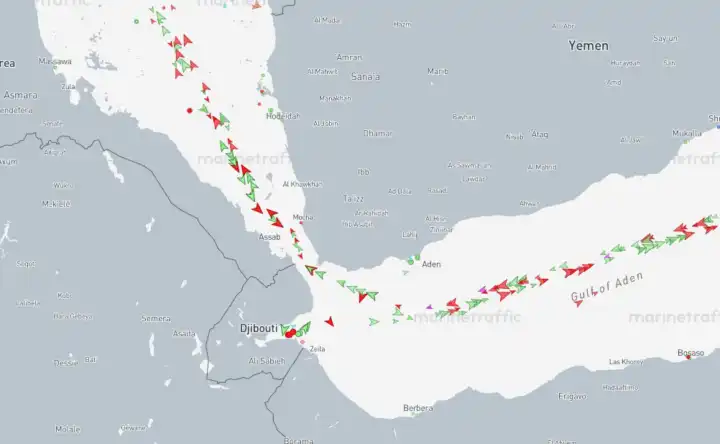
Marine traffic data sourced from marinetraffic.com showed several oil tankers and cargo ships transiting the strait.
Photo Credit: Marine Traffic
A Second Choke Point Under Threat
The Bab el-Mandeb, Arabic for "Gate of Tears", connects the Red Sea to the Gulf of Aden and the Indian Ocean. At roughly 100 kilometres in length and 30 kilometres in width, it separates Yemen on the Arabian Peninsula from Djibouti and Eritrea in the Horn of Africa.
It is through this passage that a significant share of global trade flows. Ships travelling between Asia and Europe must pass through the Strait en route to the Suez Canal, making it one of the busiest and most strategically important shipping lanes in the world.
Around 10 to 12 per cent of global oil and natural gas shipments move through Bab el-Mandeb. Roughly 12 per cent of global trade transits the strait, while about 10 per cent of global maritime trade -- including 40 per cent of container traffic -- passes through the Suez Canal.
"What makes the present situation particularly serious is that the industry has already seen how quickly shipping patterns change when confidence in the route weakens. A formal closure is not even necessary. Sustained missile or drone threats alone can force ships to divert around the Cape of Good Hope. Once that happens, transit times lengthen, fuel costs rise, round voyages become longer, and freight levels come under pressure. In that sense, Bab el-Mandeb is now the key secondary pressure point after Hormuz. If both are affected at the same time, the fallout goes well beyond oil and becomes a much wider maritime trade disruption issue," Nayeem Noor told NDTV.
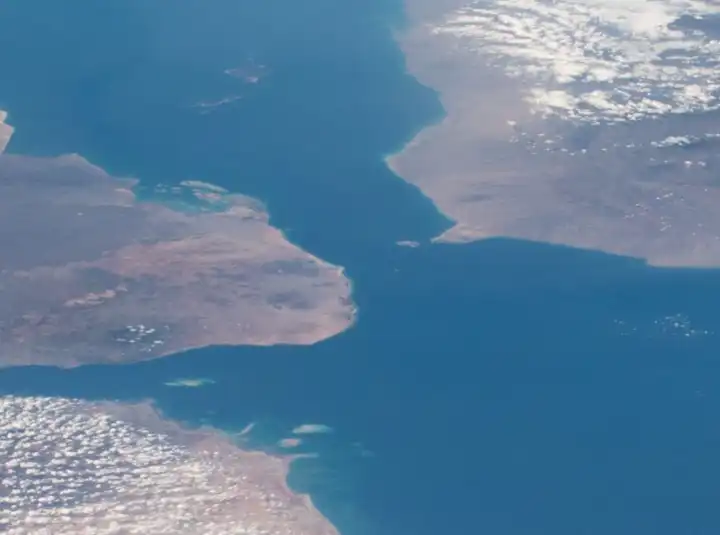
The strait as seen from space.
Photo Credit: NASA
An Iranian military official, speaking to the semi-official Tasnim news agency, warned that Tehran could escalate "insecurity in other straits, including the Bab el-Mandeb Strait and the Red Sea" if further attacks are carried out on Iranian energy infrastructure by the US and Israel.
The warning comes as the Strait of Hormuz, through which a fifth of the world's oil typically flows, has been effectively shuttered by the ongoing war.
A Fragile Alternative Route
The Red Sea route, via Bab el-Mandeb, has taken on increased importance precisely because of the disruption in the Strait of Hormuz.
Saudi Arabia, in particular, has relied on pipelines across its territory to move crude oil to the Red Sea port of Yanbu. From there, tankers can transport oil to global markets without passing through Hormuz.
"Bab el-Mandeb is not used only for oil. It is a major commercial shipping artery linking the Indian Ocean with the Red Sea and the Suez route. In 2025, more than 12,700 vessels transited the Suez Canal. On that connected corridor, tankers accounted for the largest share at about 39 per cent of total traffic. Container ships, bulk carriers, general cargo vessels, LNG carriers, Ro/Ro ships, and other vessel types also formed an important part of the mix. So while oil and tanker traffic are a very significant component, this is clearly a broader trade route used for energy, bulk cargo, containerised trade, and overall supply chain connectivity. The wider Red Sea corridor carries about 30 per cent of global container traffic, which underlines the strategic importance of Bab el-Mandeb as a key maritime choke point," Kiran Thorat, Trader, GMS, told NDTV.
GMS operates across 13 maritime hubs and works with shipowners, shipyards and financial institutions to support vessel recycling. The company's shipowning arm, Lila Global, operates a diversified fleet of 38 vessels across dry bulk, tanker, container and multipurpose segments. The company moves more than 25 million tonnes of cargo annually,
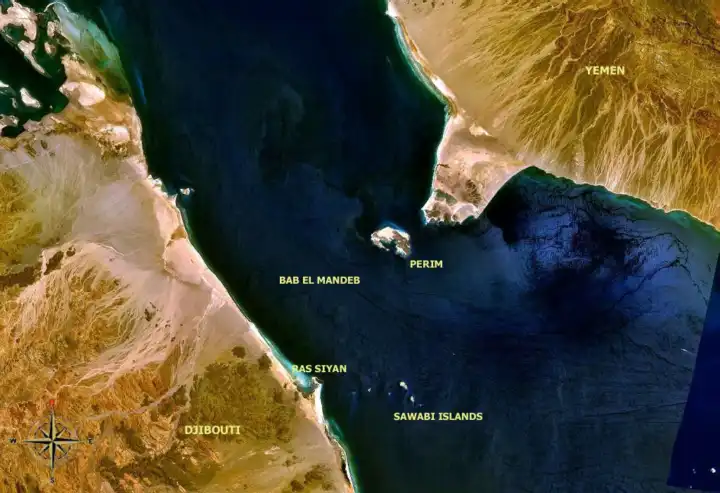
If the strait were to be blocked or significantly disrupted, industry experts warn that oil prices could surge to as high as $150 per barrel.
How It impacts India
Even before the current escalation, traffic through the Red Sea had already been sharply reduced. According to data from the Suez Canal Authority, around 26,000 ships transited the canal in 2023. By 2025, that number had fallen to 12,700 following sustained Houthi attacks.
The US Energy Information Administration reported that 12 per cent of global oil shipments passed through Bab el-Mandeb in the first half of 2023. By the first half of 2025, that volume had fallen to less than half. Average daily vessel traffic has dropped from about 75 ships in 2023 to roughly 33 in 2025, according to IMF-Oxford data.
For India, Bab el-Mandeb is commercially very important and strategically significant, and any closure of this transit route would severely impact India's energy imports.
"Oil and gas cargoes moving through the Suez Canal would have to be diverted via the Cape of Good Hope, leading to longer ton-miles, higher transport costs, and delays of at least a month in the arrival of Russian crude. This would directly raise energy and logistics costs for Indian industry, affect manufacturing through higher input costs and supply chain disruption, and add to inflationary pressure. At the same time, because Bab el-Mandeb is the gateway to the Suez route, any disruption would also increase freight and insurance costs, extend transit times, strain supply chains, and weaken the competitiveness of Indian trade in key westbound markets," Nayeem Noor told NDTV.
The Bab el-Mandeb region is already one of the most militarised regions in the world.


No comments:
Post a Comment